Hurlingham and the first English rules of polo
From hockey on horseback at Aldershot to rules drawn up in Fulham, Hurlingham’s polo history still meets the Thames in public ground.
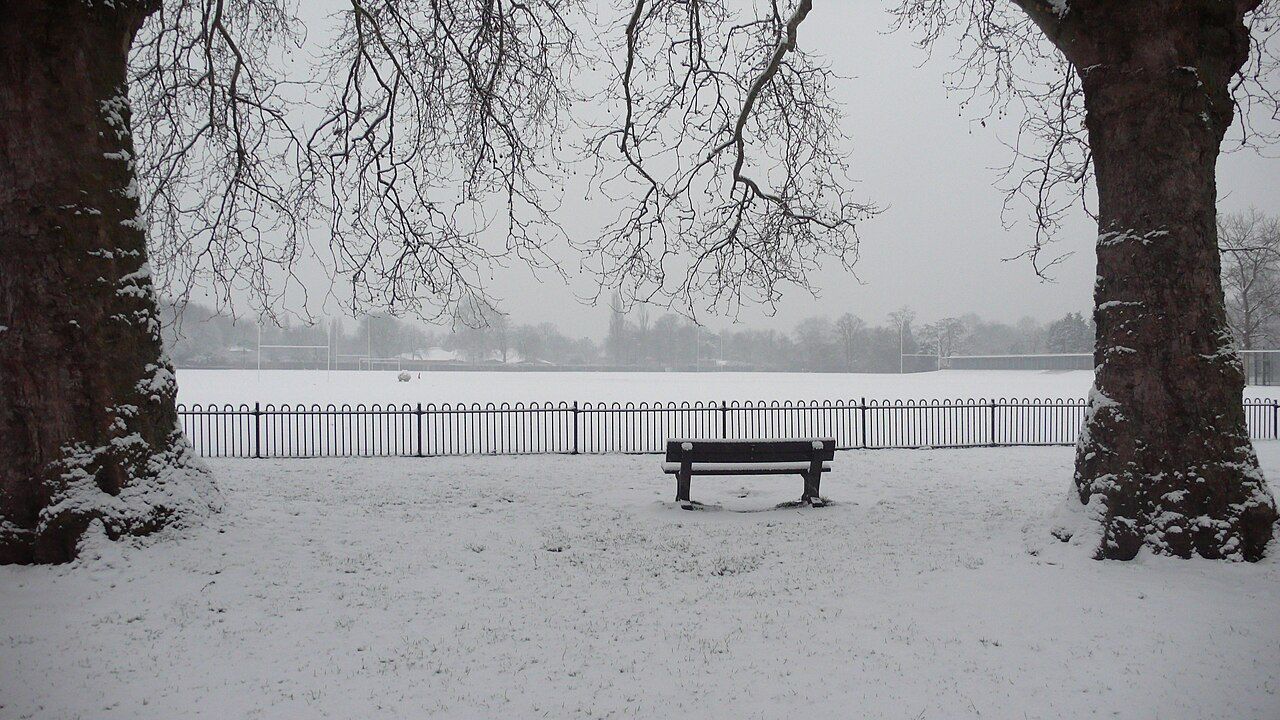 Photo by Paul Leonard / CC BY-SA source file
Dear friend, did polo arrive in England at Hurlingham, all at once, with its rules already settled? That’s the tidy version, and it’s not quite the story. The first English chapter starts elsewhere; the ground in Fulham came to matter because it gave the game a set of rules that travelled well beyond it.
Did English polo begin at Hurlingham?
The assumption: England’s polo began at Hurlingham. The fact: Polo reached England in 1869, when officers of the 10th Hussars at Aldershot tried a version they called hockey on horseback. That sounds like an arrival with more improvisation than ceremony. The first recorded polo matches in England were played around 1870, including a game on Hounslow Heath. So Hurlingham wasn’t the starting whistle. It entered the story after the game had already found ground elsewhere.
There’s a useful difference between reaching England and becoming organised in England. The earliest version had its own name, and the recorded matches belong to the years that followed. It’s tempting to press those details into a clean origin story, but I’d leave a bit of room between them. The useful point is plain enough: polo had arrived in 1869, matches were being played around 1870, and the rules came later. Each step has its own place.
Were the Hurlingham rules only for Hurlingham?
The assumption: rules drawn up for a Fulham ground stayed a local arrangement. The fact: the Hurlingham polo committee drew up the first English rules of polo in 1874, and those rules became the basis of the rules used in much of the world. That’s a considerable afterlife for a committee’s work. It makes Hurlingham more than a setting in the story: the rules made its name part of how the game was played far beyond Fulham.
The connection didn’t stop with that first set of rules. The Hurlingham Polo Association was formed in 1925 and is the governing body for polo in the United Kingdom and Ireland. There’s a pleasing plainness to that sequence: a game tried at Aldershot, matches recorded elsewhere, then a committee in Fulham putting rules on paper. The order matters. Hurlingham’s place is not that it began everything, but that its rules travelled.
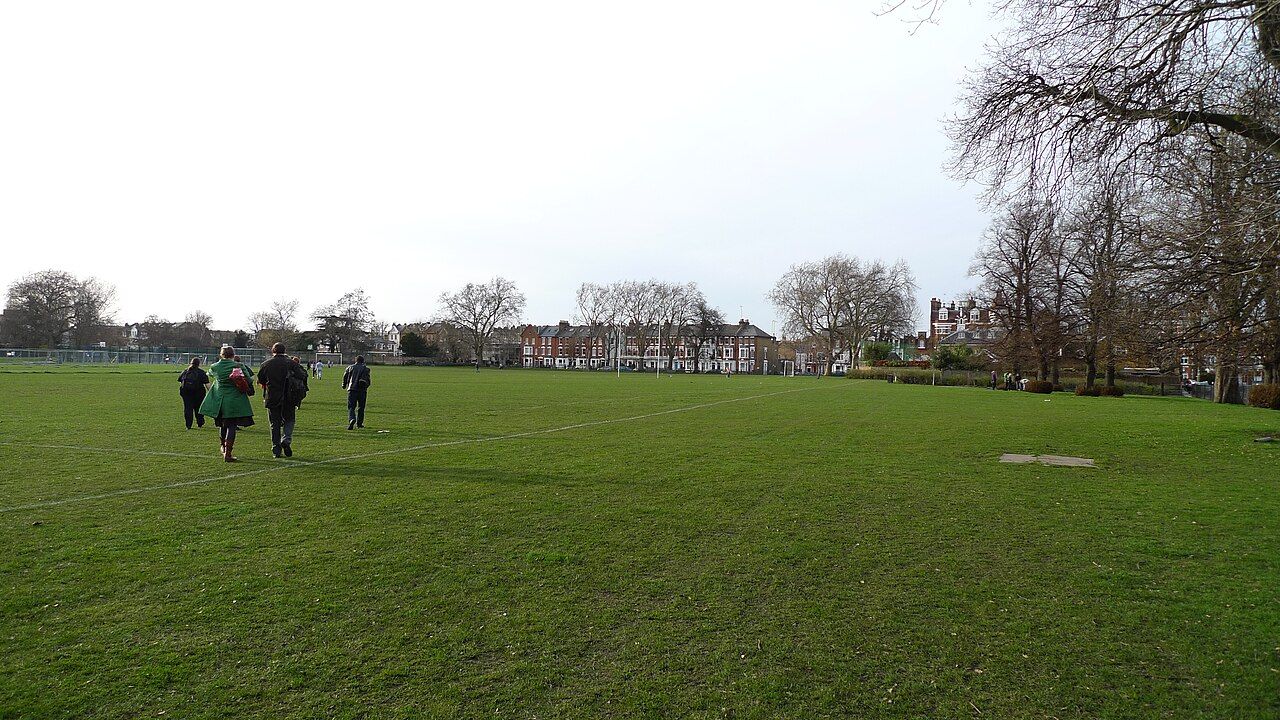 Photo by Ewan Munro from London, UK / CC BY-SA source file
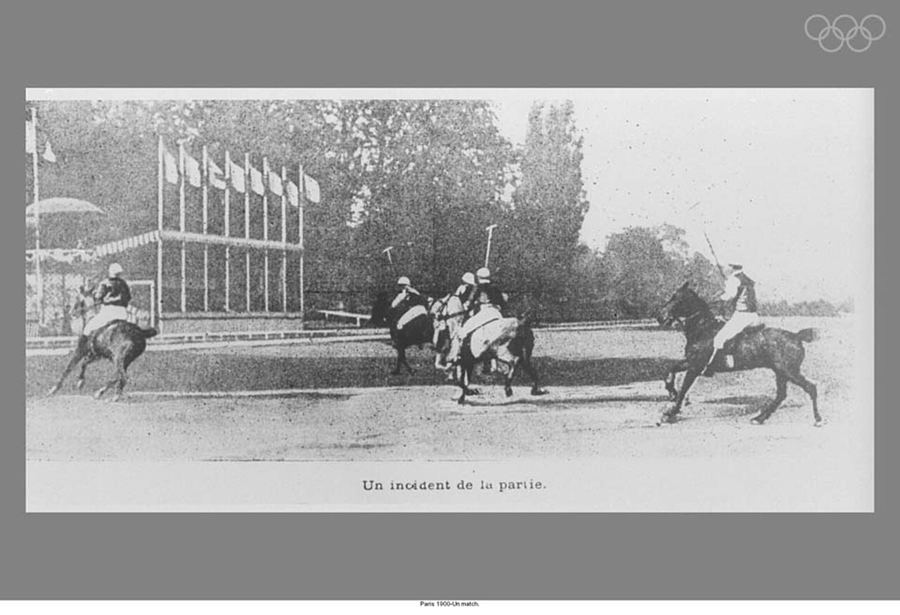
The wider story reaches beyond Fulham, into polo's Olympic years.
What’s left by the Thames?
The assumption: once polo stopped at Hurlingham, the ground’s story was over. The fact: polo was played at Hurlingham in Fulham from the 1870s until the Second World War. After the war, one of the polo grounds became Hurlingham Park, a public park. Short-format summer polo returned there as a public event in the 2000s and 2010s. The old ground’s use changed; polo still returned to it.
Fulham sits in a loop of the River Thames in west London, near Putney Bridge. Fulham Palace, the former country home of the Bishops of London, has public gardens beside the Thames. That’s what remains to picture: Hurlingham Park as public ground, and gardens beside the river. Not the old match, exactly, but a riverside setting where the story of polo in England can still be traced back to its rules.
I like that ending: a game’s rules travelling the world, while its old ground becomes a public park by the Thames.
Yours,
Cal
— Cal
Photographs used: Unknown author Unknown author / PD source file; Beatrice Murch / CC BY source file