The Argentine Open at Palermo: A Day at the Final
A spring day at Palermo, where the Argentine Open’s level start, long history and last chukka give the final its own weight.
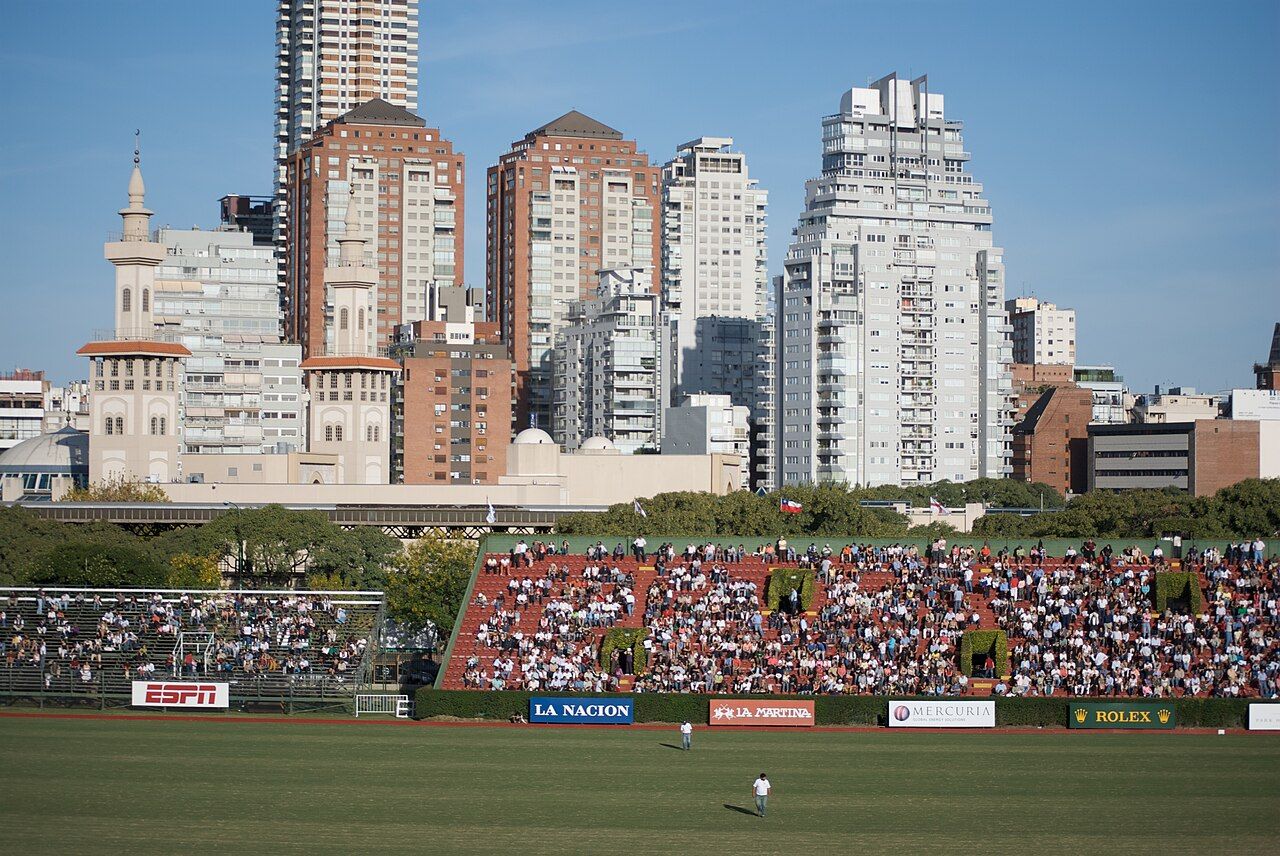 Photo by Beatrice Murch / CC BY source file
Dear friend,
1893 is where the Argentine Open begins. I’m keeping that in mind on the walk in, because this isn’t just a final with a grand name attached. It’s the last tournament of the Argentine Triple Crown, and a spring date in Buenos Aires that brings the sport’s history right up to the present tense.
Morning: what are you walking into?
The Campo Argentino de Polo sits on Avenida del Libertador, beside the Hipódromo Argentino de Palermo racecourse. The racecourse opened in 1876; the Campo followed in 1928. It’s often called the cathedral of polo, a name that might sound like a bit much until you remember how long this ground has been part of the game.
Palermo is the largest barrio of Buenos Aires, known for its parks and wide avenues. In November, the jacaranda trees bring purple flowers to the spring streets. The days are mild. There’s something pleasing about beginning the day with that softness around a place so closely tied to a game of hard edges and high stakes.
I like the walk in as a way of getting the scale of the occasion straight. Not because there’s a prescribed route or a grand entrance to make of it, but because the ground’s place in the city is part of the story. The Campo is here, beside the racecourse, in Palermo; the Argentine Open has been played here in its spring season for generations.
The tournament runs from about mid-November to early December, and the final is usually played in early December. That makes the day feel like a turning point in the local polo season: not its beginning, but its last big marker. The Argentine Open is the last of the three tournaments of the Argentine spring season.
Midday: what makes this final different?
The Open is played without a handicap start. The teams begin level on the scoreboard, which is a simple fact with a lot packed into it. There’s no adjustment at the opening to carry forward; the match begins even, and the teams have to make the difference on the field.
Top teams are often rated at or near 40 goals. I find that number useful less as a measure to memorise than as a hint about the level of the contest. The Open sits at the high end of the sport, and the final asks you to hold that in mind while watching the game unfold, chukka by chukka.
The Campo has had the Open since 1928, while the tournament itself goes back to 1893. Those dates don’t need much dressing up. One tells you how long the final has been part of polo; the other anchors it to this ground. The Argentine Polo Association, the sport’s governing body in the country, was formed in 1922, between those two dates.
There’s a tidy sequence to it, though the day itself doesn’t need to feel like a history lesson. The governing body, the ground, the tournament: each has its own date, and all of them belong to the same story. I’d rather let that sit quietly in the background and keep my attention on the match.
The Argentine Open is the last of the three tournaments of the Argentine Triple Crown.
The Argentine Open is the last of the three tournaments of the Argentine Triple Crown.
That’s the line I’d carry into the afternoon. It gives the final its particular weight without pretending that the result can be known ahead of time. The teams start level. The season has reached its last tournament. Then the game has to do the rest.
Late afternoon: what stays with you?
By late afternoon, I’m thinking less about the dates and more about the shape of the day: the walk in, the ground beside the racecourse, the final taking place in the same spring that has brought purple jacaranda flowers to Palermo. That’s a satisfying combination. The setting doesn’t need to compete with the polo; it gives the day a place to belong.
Then there’s the last chukka. I won’t pretend to know what it holds before it’s played. That’s the point of being there for a final: the score is still being made, and the level start means the contest began without a head start for either side. The season’s last tournament comes down to the game in front of you.
Afterwards, Palermo offers its parks and wide avenues as the city’s continuing company. The final can be the centre of the day without making the whole neighbourhood disappear around it. If the match leaves a little room for an evening in Buenos Aires, I’d happily let the day carry on that way.
Practical bit, before I go: the Argentine Open is played each spring at the Campo Argentino de Polo in Palermo, Buenos Aires, from about mid-November to early December; the final is usually in early December. The ground is on Avenida del Libertador, beside the Hipódromo Argentino de Palermo.
I’m left with the quiet end of it: the final chukka played, Palermo around the ground, and the season’s last tournament now behind the day. I’d give an afternoon to the final, even before anyone asks who won.
Yours,
Cal
— Cal
Photographs used: Daniel Sapag / PD source file