Ponies, Strings and the Grooms Who Keep Them
The pony lines tell a quieter part of polo’s story: the horses’ size, breeding and kit, and the grooms caring for them between chukkas.
Hello — do you ever wonder why a polo horse is called a pony?
Myth: A pony must be small. Fact: In polo, “pony” is tradition, not a description of the modern horse’s height. Most stand about 15 to 15.3 hands high. England dropped its height limit for polo ponies in 1919, and taller horses came into the game after that. The old name stayed put. I rather like that: a bit of history hiding in an everyday word.
It’s the first thing I’d ask about on a walk along the pony lines. The horses are not an accessory to the game or an amusing naming quirk. They’re where speed and quick turns begin, and where the practical work of keeping a polo day moving sits between chukkas.
Are they all the same sort of horse?
Myth: There’s one standard polo pony. Fact: Most today are Thoroughbreds or Thoroughbred crosses, prized for speed and quick turns. Mares account for a large share of top-level polo ponies, too. That’s a useful correction to the easy picture of the game as all mallets and riders: the horse’s breeding and temperament matter to what happens when the play changes direction.
Breeding is a whole thread in itself, and there’s the Criollo bloodline to follow there. For this letter, I’ll stay with what the facts tell us about the horses in the game: Thoroughbreds and their crosses are the majority, and a large share of the top-level ponies are mares.
The strings are where the game’s quickness becomes care.
The strings are where the game’s quickness becomes care.
Myth: A player brings one pony out and stays on it. Fact: A player usually rides a fresh pony for each chukka. Top players may change ponies in the middle of a chukka. A player’s group of ponies for a tournament is called a string. The word sounds simple, but it holds the moving parts together: several horses, each playing a part in the day.
And that brings us to the grooms. In Argentina, the grooms who care for strings of polo ponies are called petiseros. It’s a lovely, specific word to carry along the lines. The game may be decided in the space of a chukka, but the horses are cared for between them. That in-between work is easy to miss if all the attention stays on the ball.
Does the kit just look the part?
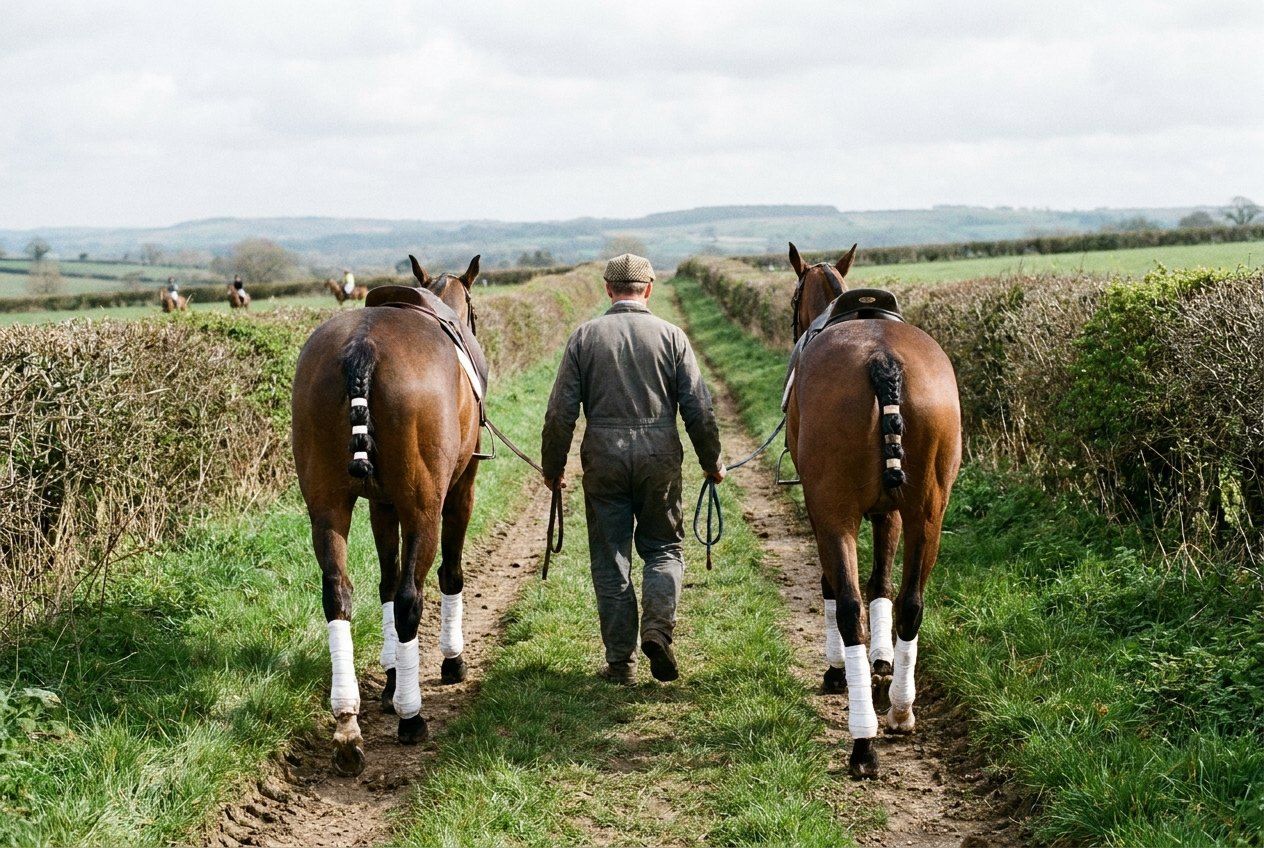
Myth: The bandages, shaved manes and tied tails are simply a look. Fact: Polo ponies’ legs are wrapped in bandages or boots to protect them from the ball and mallets. Their manes are shaved short so the reins and mallet don’t catch. In Britain that’s called hogging; in America, roaching. Their tails are braided and taped up into a knot to keep them clear of the mallet.
There’s a pleasing plainness to each reason. Protection for the legs. Nothing catching on the mane. The tail kept out of the mallet’s way. The kit isn’t decoration laid over the horse; it answers the exact business of playing polo. I’m firmly on the side of equipment with a job to do.
There’s also the way a pony turns. Polo ponies are trained to neck rein: they turn from the press of the rein against the neck. The rider’s right hand holds the mallet, so the rein cue has to work another way. A small piece of technique, perhaps, but it makes the horse’s training legible. The game asks for a quick response, and the cue is built around the player’s hands being occupied.
That detail is a good reminder that a pony isn’t just fast. Speed is prized, yes, and so are quick turns; but there’s training underneath the movement. The kit protects the horse, the rein cue helps direct it, and the string gives the player fresh ponies to ride. It’s a connected set of choices, not a collection of polo curiosities.
Myth: A polo pony’s useful years are brief. Fact: Many keep playing well into their teens. I’m glad that fact gets a mention. The name can make the horse sound slight; the changing ponies can make them seem interchangeable. Neither does justice to an animal with its own working life, training and place in a string.
So the pony lines are worth looking at as more than a pause between the action. They hold the horses’ different jobs in view: the wrapped legs, the hogged or roached mane, the tail secured clear, the fresh pony ready for a chukka, the petiseros caring for the strings. Nothing grand about it. Just the close, necessary details that let the game happen.
I’d leave the lines with the image of that knot of tail, taped up and clear of the mallet, and the horses waiting in their own quiet way for their turn. The game’s quickness is only half the story.
Yours, Cal
— Cal
Photographs used: Pascal Coste / PD source file