Snow Polo on the Frozen Lake at St. Moritz
A red ball, studded pony shoes and a January tournament: snow polo shares its frozen lake with horse racing and a long history of winter sport.
Could a polo match really be played on a frozen lake? Dear friend, at St. Moritz the answer’s yes, and the details are more practical than mysterious.
Snow polo has been played on the frozen lake at St. Moritz since 1985. The Snow Polo World Cup St. Moritz is held each year in late January on Lake St. Moritz. It’s a particular kind of winter event: the playing surface is snow-covered ice, and the game’s equipment has to make sense against it.
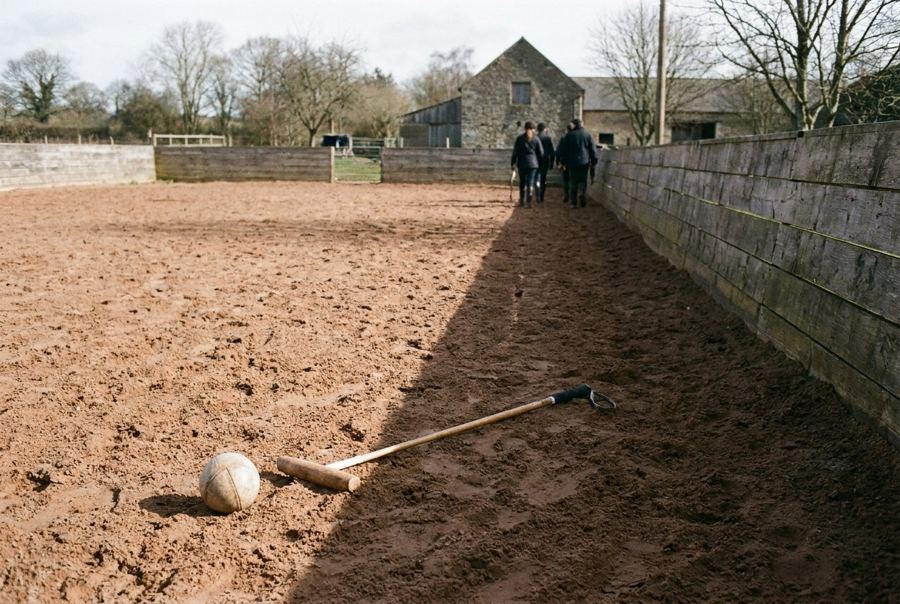
The red ball: brightly coloured, usually red or orange, so it shows up against the snow.
The red ball is not decoration; it is a piece of working equipment.
The red ball is not decoration; it is a piece of working equipment.
Is it just ordinary polo with snow around it?
Myth: the ball is the usual sort, only easier to lose.
Fact: snow polo uses a larger, brightly coloured ball, usually red or orange. The reason is right there in the setting: it needs to show up against the snow. That’s a small adjustment with a clear purpose, and probably my favourite kind. No grand theory required; make the ball visible where it’s being played.
That practical choice is part of what separates this from a match simply moved outdoors in winter. The surface is snow-covered ice, and the ball is changed to suit the contrast. It belongs to a wider winter story of polo through the northern winter, though the useful detail here is particular to St. Moritz: the ball has to stand out on the lake.
Myth: a pony’s shoes need no special thought.
Fact: ponies in snow polo wear special studded shoes to grip the snow-covered ice. The detail matters because this isn’t a grass field with a bit of snow nearby. The ice is the playing surface, and the studs are there for grip on it. I like a sport better when its cleverness is plain to see, even when the equipment’s doing the explaining.
Stidded shoes: the ponies wear special studded shoes to grip the snow-covered ice.
Is the lake simply a rink for the tournament?
Myth: the January match is the only reason the lake freezes.
Fact: Lake St. Moritz usually freezes thick enough by January to carry horses, stands and crowds. That’s what makes the scale of the Snow Polo World Cup possible on the lake. And it isn’t the only event built around that frozen surface. The White Turf horse races have been run on the frozen lake at St. Moritz each February since 1907.
January and February, then: two different dates in the winter calendar, both attached to the lake. Snow polo has its late-January tournament; White Turf follows in February. The timing’s a useful distinction, and one worth keeping straight rather than folding every frozen-lake event into the same vague idea of winter sport.
The mountains and the valley: St. Moritz lies at about 1,800 metres in the Upper Engadine valley of the Swiss canton of Graubünden.
Myth: frozen-lake sport is the whole winter story here.
Fact: there are other pieces to it. The Cresta Run, a natural ice toboggan run from St. Moritz towards Celerina, was first built in 1885. St. Moritz hosted the Winter Olympic Games in 1928 and 1948. Those are different kinds of winter history, but together they make clear that the polo tournament isn’t the only way the place has been connected with ice and snow.
There’s also a railway story in the surrounding area. In 2008, the Albula and Bernina railway lines near St. Moritz received UNESCO World Heritage status. That belongs to the wider setting rather than to the polo match itself. Still, it helps give the place more than one winter thread: a game on the lake, races on the lake, a natural ice run, Olympic Games and railway lines recognised as heritage.
St. Moritz lies at about 1,800 metres in the Upper Engadine valley of the Swiss canton of Graubünden. That’s the plain geographical fact behind the scene, and it’s enough to place the tournament without dressing it up. The lake, the valley and the snow-covered ice do the work.
What’s the sensible way to think about the tournament?
Not as a novelty that happens to have horses on ice, and not as a winter version that can be understood without its own details. The larger coloured ball answers the problem of seeing it against snow. The studded shoes answer the problem of grip on snow-covered ice. The lake usually freezes thick enough by January to carry horses, stands and crowds. Those facts make the event legible.
And then there’s the calendar. Late January for the Snow Polo World Cup St. Moritz; each February for White Turf. I’d keep those timings at the front of the story, because the frozen lake is not just a backdrop. It’s the shared stage, with different events making use of it at different points in the season.
So, yes, polo on a frozen lake. The red ball and the studded shoes are not side notes; they’re the parts that make the picture add up. I’ll take a sporting tradition that explains itself through its equipment, and a winter calendar with the dates kept distinct.
Yours,
Cal
— Cal
Photographs used: gailhampshire from Cradley, Malvern, U.K / CC BY source file; Vssun / CC BY-SA source file