Arena Polo: The Winter Game
The arena keeps polo moving through the northern winter—and puts the walls, the bigger ball and the learning close at hand.
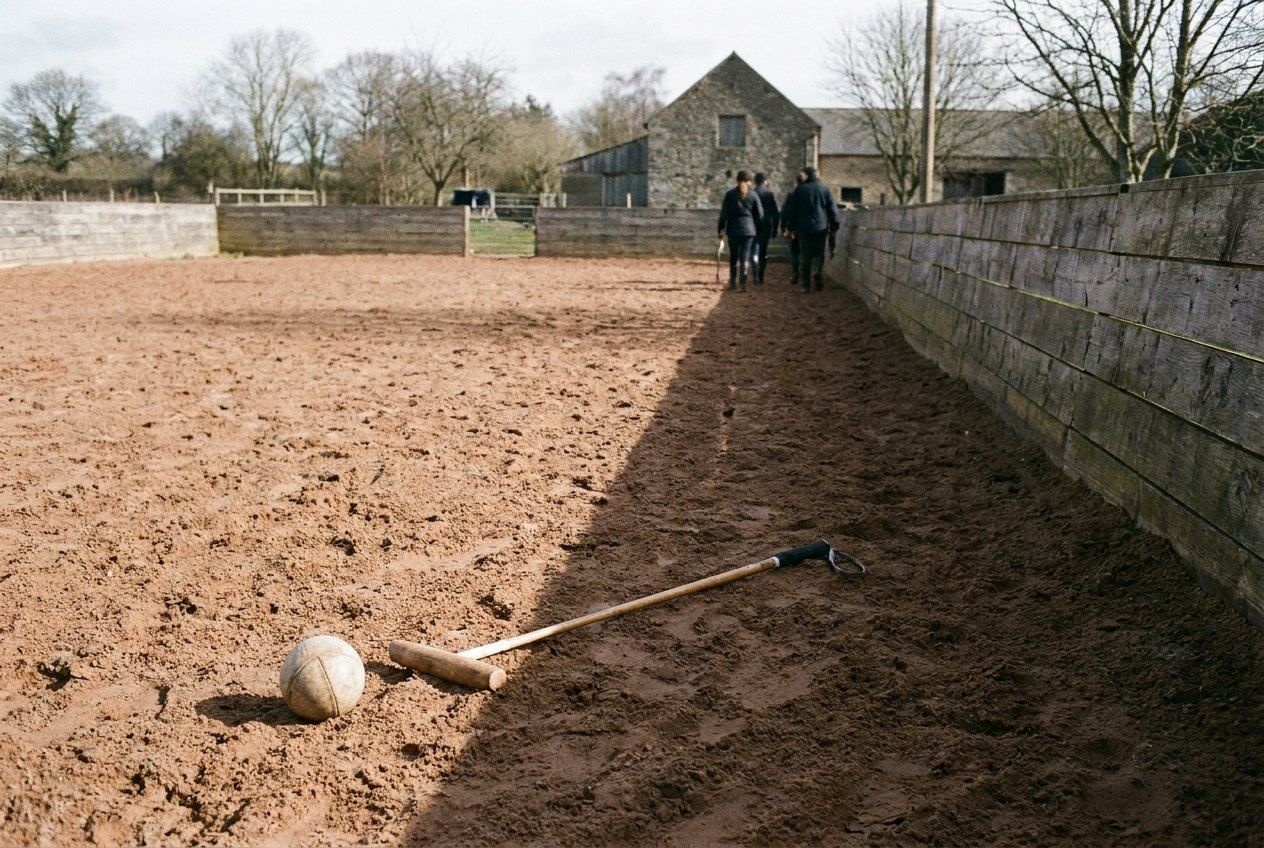
Could this be the easiest way into polo? Arena polo is played in an enclosed space, with walls around a field usually about 300 feet long and 150 feet wide. The scale makes the action feel close at hand, and there’s no long stretch of grass between the game and the person trying to follow it.
Three players to a side, rather than four. A larger, softer inflated ball. The shape of the game changes, but it’s still polo, and the matches usually have four chukkas. For a newcomer, that smaller space and the ball staying in play make the arena a straightforward place to watch and begin to understand what’s happening.
What do the walls add?
They’re part of the game. The ball can be played off them, much like a cushion in billiards. There’s a pleasing directness to that: the boundary isn’t simply where the play stops. The walls keep the ball in play, and many players learn polo in the arena for just that reason, as well as the smaller space.
It’s a different picture from the outdoor game on grass, but it answers the same winter problem. In the north, grass fields can be too wet or frozen for polo. Arena polo lets the sport carry on. In Britain, its season runs from about October to March. I like that there’s no need to pretend winter has put the game away.
There’s an arena version of the handicap, too: a player’s arena handicap is rated separately from their outdoor one. And in the United States, college polo is mostly played in arenas. The indoor game isn’t just a winter substitute, then; it’s also a place where players learn, and where a new watcher can see the play contained by the walls.
So there’s the scene I’d keep: a ball coming back off a wall, the three players moving around it, and a newcomer following the play without needing a field’s worth of distance to work it out. A good winter’s answer to the question of where polo goes next.
Write soon,
Cal
— Cal
Photographs used: Vssun / CC BY-SA source file; Jakub Hałun / CC BY-SA source file; Haoreima / CC BY-SA source file